A kitchen sink clogged on both sides almost always means the blockage is past the point where the two bowls join, in the shared trap or the drain line behind the wall, not in either bowl itself. That is good news and bad news: the cause is usually grease and food waste rather than a broken pipe, but plunging one side rarely fixes it. Newman's Plumbing Service & Repair has cleared kitchen drains across Hampton Roads since 1994, licensed and insured under Virginia License No. 2705161180. If water is standing in both bowls right now, call (757) 465-0883, or read on to find out where the clog sits and what you can safely try first.
Why a Double Kitchen Sink Clogs on Both Sides at Once
A double kitchen sink looks like two drains, but it is really one. Each bowl has its own tailpiece, and the two meet at a tee or a continuous waste fitting just above a single P-trap. From that trap, one drain arm runs into the wall and joins the branch line that carries kitchen water toward the main sewer.
So when a double kitchen sink is clogged in both bowls, the blockage is at or below that junction. In the kitchens we open up around Portsmouth, Chesapeake, and Norfolk, the usual suspects are:
- Grease and cooking oil that went down warm and hardened in the trap or the cooler pipe inside the wall
- Coffee grounds, rice, pasta, and eggshells that the garbage disposal ground up but never fully flushed out
- A packed disposal discharge pipe, where the disposal side joins the shared drain
- Soap and food sludge that has narrowed an older galvanized or cast iron branch line over years
- A dishwasher drain hose emptying into the same line and adding to a blockage that was already forming
Kitchen Sink Backing Up Into the Other Side: What That Tells You
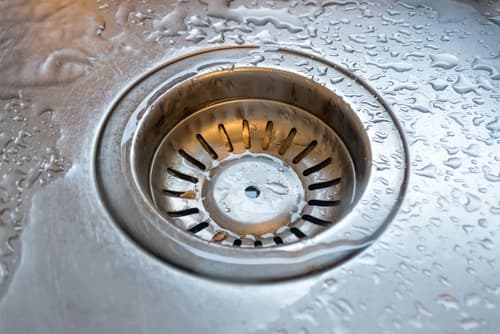
When you run water or the disposal on one side and dirty water rises in the other bowl, the water is taking the easiest path. It cannot get past the clog, so it climbs back up through the open tailpiece next door. That confirms the blockage is downstream of where the bowls connect.
Where it backs up matters too. If running the dishwasher pushes water into the sink, the clog is past the point where the dishwasher hose ties in. If water also gurgles up in a nearby laundry tub or a bathroom on the same wall, the problem is likely further down the branch line, and the sink is just the lowest open drain. That pattern is worth noting before anyone starts taking pipes apart.
What You Can Safely Try Before Calling a Plumber
Some of these clogs clear with a little patience. Try these in order, and stop if anything leaks or you feel resistance you cannot move:
- Stop running water and the disposal on both sides. More water only raises the level and makes the job messier.
- If you have a disposal, turn off the power and use the hex key on the bottom of the unit to free a jam, then press the reset button.
- Plug one drain tightly with a wet rag or a stopper and plunge the other side with a flat cup plunger. Without the seal, the pressure just escapes through the other bowl.
- With a bucket underneath, loosen the slip nuts on the P-trap and clean it out. Many double-sink clogs end right here.
- If the trap is clear, the blockage is in the wall. A small hand auger fed into the drain arm can reach the first few feet.
Why Chemical Drain Openers Make This Clog Worse
Skip the bottle of drain cleaner. With both bowls full, the chemical sits on top of standing water and barely reaches the clog. What it does do is soften older PVC joints and eat at metal traps and cast iron, and it leaves a caustic sink for whoever has to open the pipe next, whether that is you or our technician.
Hot water and dish soap help a little with fresh grease, but they rarely move a clog that has been building for months. Boiling water poured into a PVC trap can warp the joints, so keep it to hot tap water.
When a Recurring Kitchen Clog Points to the Branch Line
If your trap is clean and the sink still backs up, or the same kitchen drain clogs every few months, the problem is in the line itself. Kitchen branch lines in older Hampton Roads homes are often galvanized steel or cast iron, and the inside of those pipes roughens with age. Grease clings to that rough surface, and each cleaning only punches a hole through a clog that keeps rebuilding around it. We explain that cycle in more detail in why your drain keeps clogging even after cleaning.
Our drain cleaning service starts with finding where the blockage actually is, then clearing it with the right tool for that pipe. For a long run of grease-coated line, hydro jetting scrubs the pipe walls back to bare pipe instead of just opening a path through the middle. If a camera shows the pipe itself is cracked, sagging, or scaled shut, we will tell you plainly that cleaning will not hold and lay out what will, with the price before any work starts.
Every job is backed by our 100 percent workmanship guarantee. And if both bowls are full on a holiday evening with a house full of guests, we run true 24/7 service with a typical 60 to 90 minute response across Portsmouth, Chesapeake, Norfolk, Virginia Beach, Suffolk, Hampton, and Smithfield. Call (757) 465-0883 day or night.
How to Keep Both Sides of the Sink Draining
Most kitchen clogs are built one meal at a time, so a few habits go a long way:
- Wipe greasy pans with a paper towel and throw it out before washing them
- Pour cooled cooking oil into a can or jar for the trash, never down the drain
- Scrape plates into the trash, even with a disposal; it is not built for rice, pasta, peels, or grounds
- Run cold water for 15 to 20 seconds after the disposal stops so the waste clears the trap
- Use basket strainers on both bowls and empty them often
Frequently Asked Questions
Why is my kitchen sink backing up on both sides?
Your kitchen sink backs up on both sides because the clog is in the shared drain below where the two bowls connect, usually the P-trap or the drain line inside the wall. Grease, food waste from the disposal, and coffee grounds cause most of these blockages. Plunging one side while the other is sealed, or cleaning out the trap, often clears it; if not, call Newman's Plumbing at (757) 465-0883.
Can a clogged dishwasher cause both sides of the kitchen sink to back up?
No, the dishwasher is usually a victim rather than the cause, because it drains into the same line as the sink. When the shared drain is blocked, dishwasher water has nowhere to go and comes up in the sink. Clear the sink drain first and the dishwasher normally drains again on its own.
Should I use a chemical drain cleaner on a double kitchen sink?
No, chemical drain cleaners rarely clear a double-sink clog and can damage older pipes and trap joints. With standing water in both bowls, the chemical never reaches the blockage. A plunger with the other drain sealed, a trap cleanout, or a hand auger is safer and more effective.
How long does it take a plumber to clear a kitchen sink clogged on both sides?
Most double-sink clogs are cleared in under an hour once a plumber is on site. A clog in the trap or the first few feet of drain arm is quick; a long grease buildup in the branch line can take longer, especially if it needs hydro jetting or a camera inspection to find the cause.
Need help with this?
Newman's Plumbing has served Hampton Roads since 1994.