When you search for a sewage disposal service near me, the problem usually is not a single clogged sink. It is sewage that has nowhere to go, and the reason is almost always somewhere underground, between your foundation and the city main. Newman's Plumbing Service & Repair has been finding and fixing those problems across Hampton Roads since 1994. We are family owned, licensed and insured under Virginia License No. 2705161180, and we answer the phone 24/7 at (757) 465-0883. Here is what is actually going on below your yard, what the repair looks like, and what to do while you wait for help.
How Wastewater Leaves a Hampton Roads Home
Every drain in your house feeds one main building drain, which exits through the foundation and becomes the sewer lateral. That lateral runs under the yard to the public sewer main in the street, or to a septic tank on properties that are not on city sewer. From the main, wastewater in most of our area moves on to the Hampton Roads Sanitation District treatment plants.
The part that matters to you is the lateral. In most Hampton Roads cities, the homeowner is responsible for that pipe from the house out to the property line or the city cleanout, and the city takes over from there. The exact dividing line varies by locality, so it is worth reading our breakdown of who is responsible for sewer line repair before you call anyone.
Older neighborhoods in Portsmouth, Norfolk, and Hampton still have laterals made of clay tile, cast iron, or Orangeburg pipe. Those materials were fine for their day, but decades in sandy, shifting soil with a high water table take a toll. Joints separate, pipe bellies sag and hold standing water, and roots find every gap.
Warning Signs of an Underground Sewage Problem
The pattern of the backup tells you more than the backup itself. One slow sink is a local clog. Trouble in several fixtures at once, or trouble that shows up at the lowest drain in the house, points to the main line. Look for:
- Water rising in a tub or shower when a toilet is flushed or the washer drains
- Gurgling from drains that are not being used
- A sewage smell in the yard, crawlspace, or near the cleanout cap
- Wet, sunken, or unusually green strips of lawn along the path of the line
- A cleanout cap that is pushed up or seeping
- Backups that come back within weeks of having the line snaked
Pumping, Cleanup, and Getting Sewage Out Safely
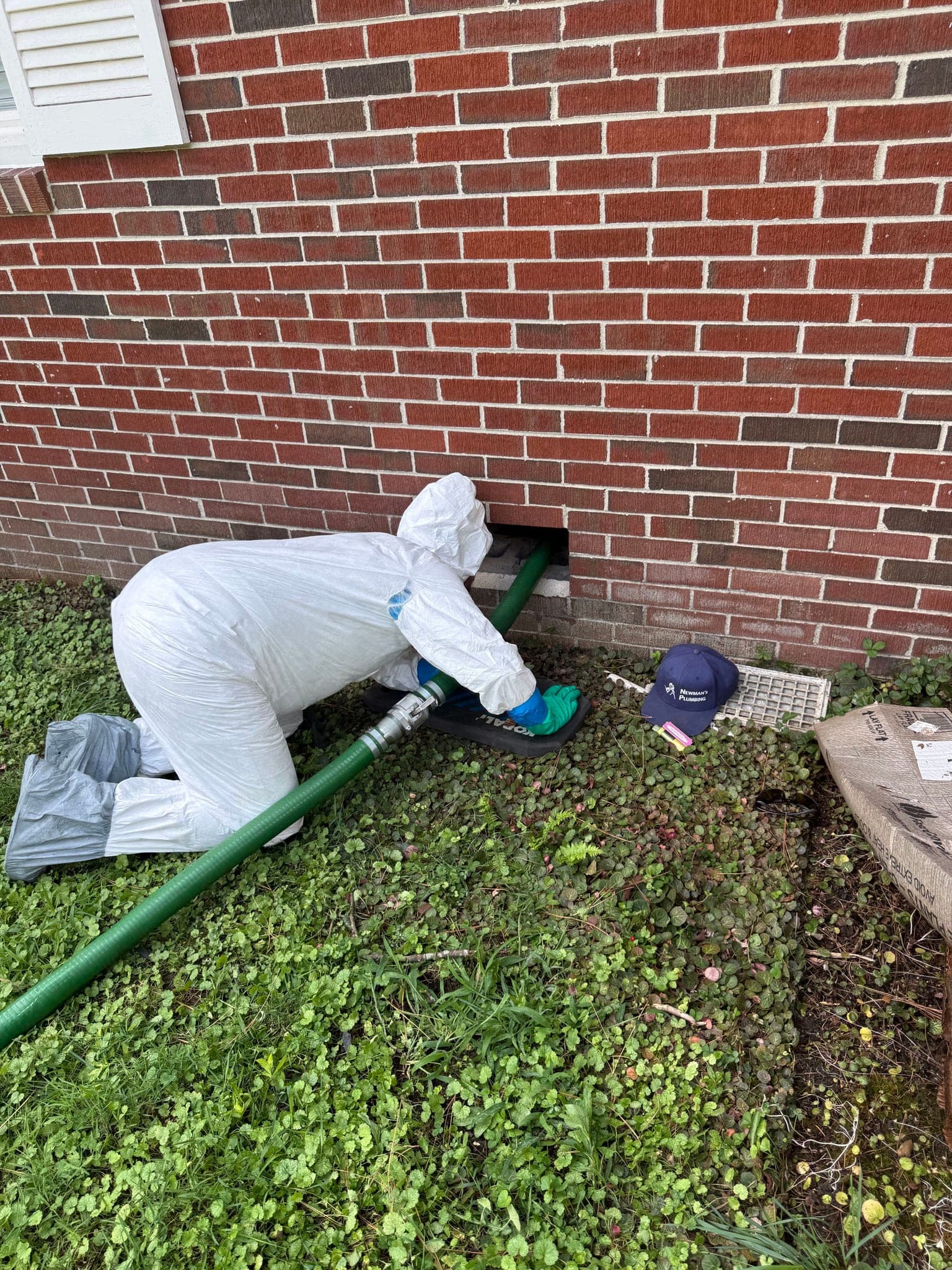
Proper sewage disposal happens in two stages: get the waste out, then fix whatever caused it. Skipping the second stage is how homeowners end up paying for the same cleanup twice.
Raw sewage is a health hazard, not just a mess. When it pools in a crawlspace, which is common in Hampton Roads homes built off the ground, our crew uses vacuum equipment to remove it and hauls it for proper disposal rather than pushing it somewhere out of sight. Affected insulation and vapor barrier usually have to come out, and the area needs to dry before anything goes back in.
At the same time, we clear the line so the house can drain again. Depending on what is inside the pipe, that means cabling through roots or hydro jetting to scour grease and scale off the walls. Once flow is restored, a camera goes down the line. That footage is what tells us whether a cleaning will hold or whether the pipe itself has failed and needs sewer line repair or replacement.
Why an Excavating Contractor Portsmouth VA Homeowners Hire Should Also Be a Plumber
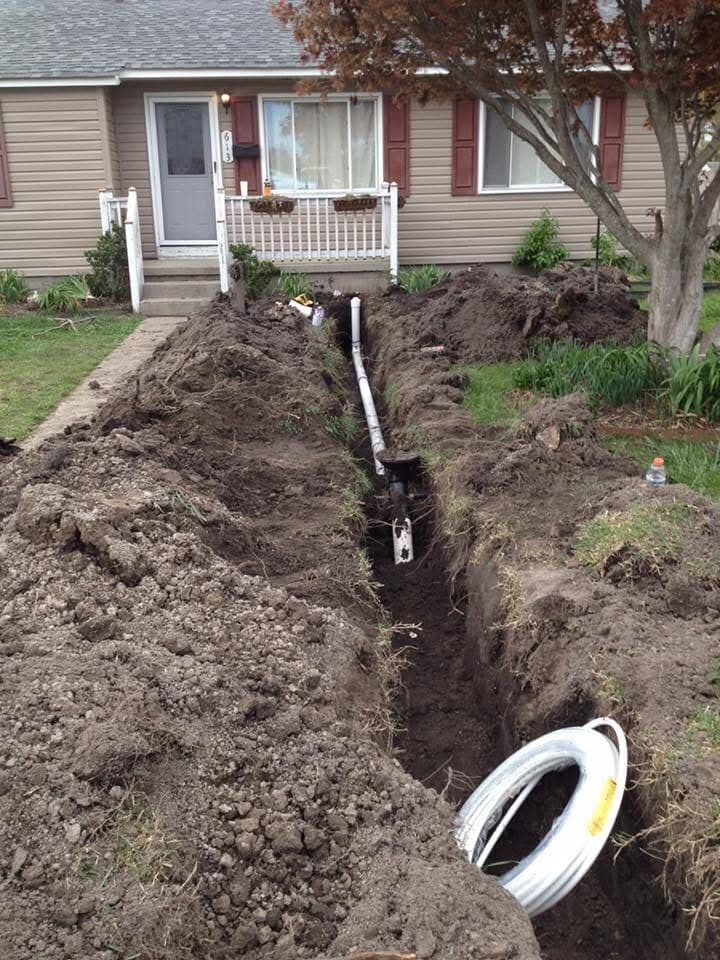
When a lateral has collapsed, lost its slope, or broken in several places, it has to be dug up. Plenty of companies can run an excavator. Fewer can dig to the right spot the first time, set new pipe at the correct grade, pass inspection, and restore the yard, all under one license.
That is the advantage of hiring a plumbing company that does its own excavation. The camera locates the break, so the dig is targeted instead of exploratory. The same crew that opens the trench sets the new PVC, tests it, and backfills it. You are not coordinating a digging contractor, a plumber, and a permit between them, and nobody can point at the other when something goes wrong.
Not every underground problem needs a trench, and we will not pretend otherwise. A line with a single root intrusion or one cracked joint can often be spot repaired or restored with trenchless methods through small access points. A pipe that has fully collapsed or sagged into a belly usually cannot. We show you the footage and let you see the difference for yourself before you approve anything.
Plumbing Considerations for a Bathroom Remodel Start Below the Floor
If you are planning a bathroom remodel, the most important plumbing consideration is often not the fixtures. It is the drain line they will empty into. A new walk-in shower, a second vanity, or a relocated toilet all add load to a building drain and lateral that may already be 50 or 60 years old.
We recommend a camera inspection of the main line before the tile goes down. It costs far less than tearing out a finished floor to reach a cracked cast iron drain, and it tells you whether that old pipe under the slab or crawlspace is ready for the next few decades. Other items worth settling early: vent sizing for any moved fixtures, shower drain location and slope, and whether an old galvanized supply line should be replaced while the walls are open. Our residential plumbing team handles all of it, from rough-in to final inspection.
What to Do Before Help Arrives
If sewage is backing into the house right now, stop using water everywhere. Every flush, shower, and load of laundry sends more water into a line that cannot carry it. Keep children and pets away from standing wastewater, and do not pour chemical drain openers into a main line backup. They will not clear roots or a broken pipe, and they make the water more dangerous for anyone who has to work in it.
If you can safely reach the outdoor cleanout, loosening the cap can let sewage relieve outside instead of into the house. Do not open it if it is under pressure or already seeping.
Then call us. Newman's runs true 24/7 emergency plumbing service across Portsmouth, Chesapeake, Norfolk, Virginia Beach, Suffolk, Hampton, and Smithfield, with a typical 60 to 90 minute response for emergencies. Every job is backed by our 100 percent workmanship guarantee. Reach us at (757) 465-0883, day or night, or stop by 2140 Colorado Ave., Portsmouth, VA 23701.
Frequently Asked Questions
What should I do if my drain is completely clogged?
Stop running water, skip the chemical drain cleaners, and check whether other drains in the house are backing up too. If only one fixture is blocked, a plunger or hand snake may clear it. If several drains are slow or water comes up in a tub when you flush, the clog is in the main line and needs professional drain cleaning. Newman's Plumbing is available 24/7 at (757) 465-0883.
What does a sewage disposal service actually do?
A sewage disposal service removes backed-up wastewater safely and fixes the reason it backed up. For a home, that means vacuuming out standing sewage, clearing the blocked line, inspecting it with a camera, and repairing or replacing any broken section of the sewer lateral.
Is a sewage backup covered by homeowners insurance?
Often not under a standard policy. Many insurers only cover sewer backup damage if you added a sewer or water backup endorsement, so check your policy before you need it. Damage to the lateral itself from age or roots is usually treated as maintenance.
How long does it take to repair an underground sewer line?
A spot repair or trenchless fix is often finished in a day or two, while a full excavated replacement can take several days including backfill and yard restoration. The camera inspection determines which one your line needs, and Newman's gives you upfront pricing before work starts.
Need help with this?
Newman's Plumbing has served Hampton Roads since 1994.