A sewer smell in the house almost always means sewer gas is getting past one of the seals that is supposed to keep it in the pipes: a dried-out drain trap, a failed toilet wax ring, a blocked plumbing vent, or a cracked drain line. Most of those are cheap fixes once you know which one it is. Newman's Plumbing Service & Repair has been tracking down these odors in Hampton Roads homes since 1994, licensed and insured under Virginia License No. 2705161180. If the smell is strong or will not go away, call (757) 465-0883. Otherwise, here is how to narrow it down yourself first.
How Sewer Gas Gets Into a Home
Every drain in your house connects to the same sewer line, and that line is full of gas from decomposing waste — mostly methane and hydrogen sulfide, which is the rotten-egg part. Two things keep it out of your living space. The first is the trap: the U-shaped bend under every sink, tub, shower, and floor drain that holds a plug of water. The second is the vent system, the pipes that run up through the roof and let gas escape outside while keeping pressure in the drains balanced.
When either of those fails, the gas takes the easiest path, and that path is into the room. So the question is never really why the house smells. It is which seal broke, and where.
One safety note before anything else. Natural gas is given a sulfur smell on purpose, and it can be hard to tell apart from sewer gas. If the odor is near a gas appliance, a gas water heater, or the stove, or you hear hissing, leave the house and call your gas utility from outside. Sewer gas is unpleasant; a gas leak is dangerous.
Why Does My Bathroom Smell Like Sewer?
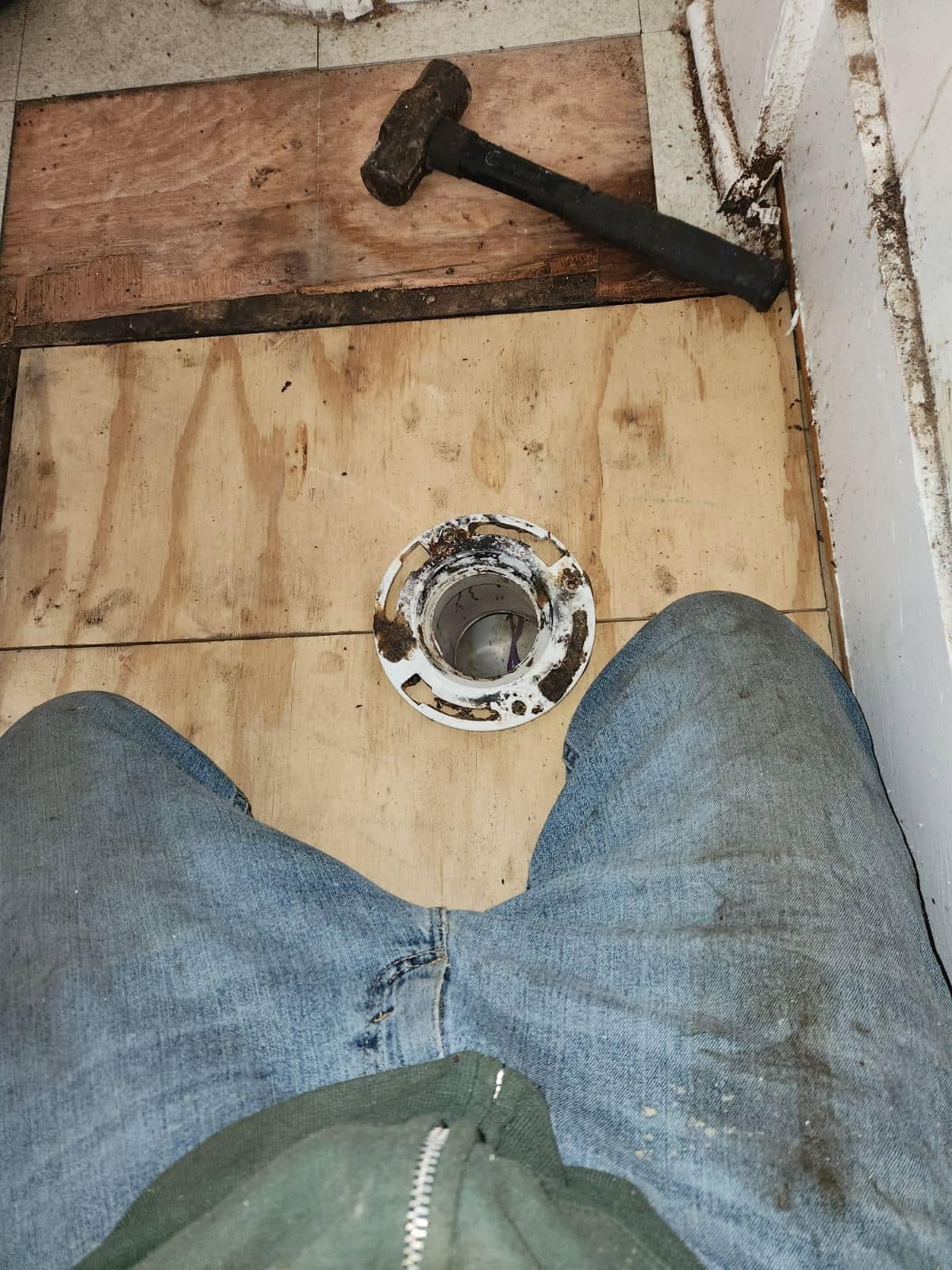
Bathrooms are where most of these calls start, and the cause is usually one of three things.
A dry trap is the most common, and the easiest to fix. A guest bath nobody uses, a basement shower, or a floor drain in the laundry room will lose its water to evaporation in a few weeks, especially with the air conditioning running through a Hampton Roads summer. Once the trap is dry, the pipe is open straight to the sewer. Run water for 30 seconds in every fixture you rarely use and see if the smell fades by the next day. For a floor drain, a tablespoon of mineral oil on top of the water slows evaporation.
A failed wax ring is the second. The wax seal under the toilet can crush, dry out, or shift when a toilet rocks even slightly. The giveaways are a smell that is strongest right at the base of the toilet, a toilet that moves when you sit on it, or staining on the floor around it. Tightening the bolts does not fix a broken seal; the toilet has to come up and the ring has to be replaced, and if the flange underneath is cracked or rusted, that gets repaired too.
The third is the sink overflow. The small hole near the top of a bathroom sink collects soap scum and hair that rot in place. Scrubbing it out with a small brush and hot water often solves a smell people were sure was coming from the sewer.
When the Shower Drain Smells Like Sewer
A shower drain that smells is usually one of two problems, and they point in very different directions.
If the odor is musty and sour rather than true sewage, it is probably biofilm: a slimy layer of hair, soap, and bacteria coating the pipe just below the grate. Pull the grate, clear what you can reach, and flush the drain with very hot water. Skip the chemical drain cleaners — they rarely touch biofilm and they are hard on older pipe.
If it smells like actual sewage, and especially if the shower drain also gurgles when the toilet flushes, the vent may be blocked. Leaves, bird nests, and in older homes even a dropped tennis ball can plug a roof vent. Without air coming in from above, draining water pulls the water out of nearby traps as it goes, and gas follows. Some newer homes use an air admittance valve under the sink instead of a roof vent, and those valves wear out and stick. Either way, a vent problem is worth having a plumber look at rather than climbing on the roof.
Cracked Drain Lines Under the House
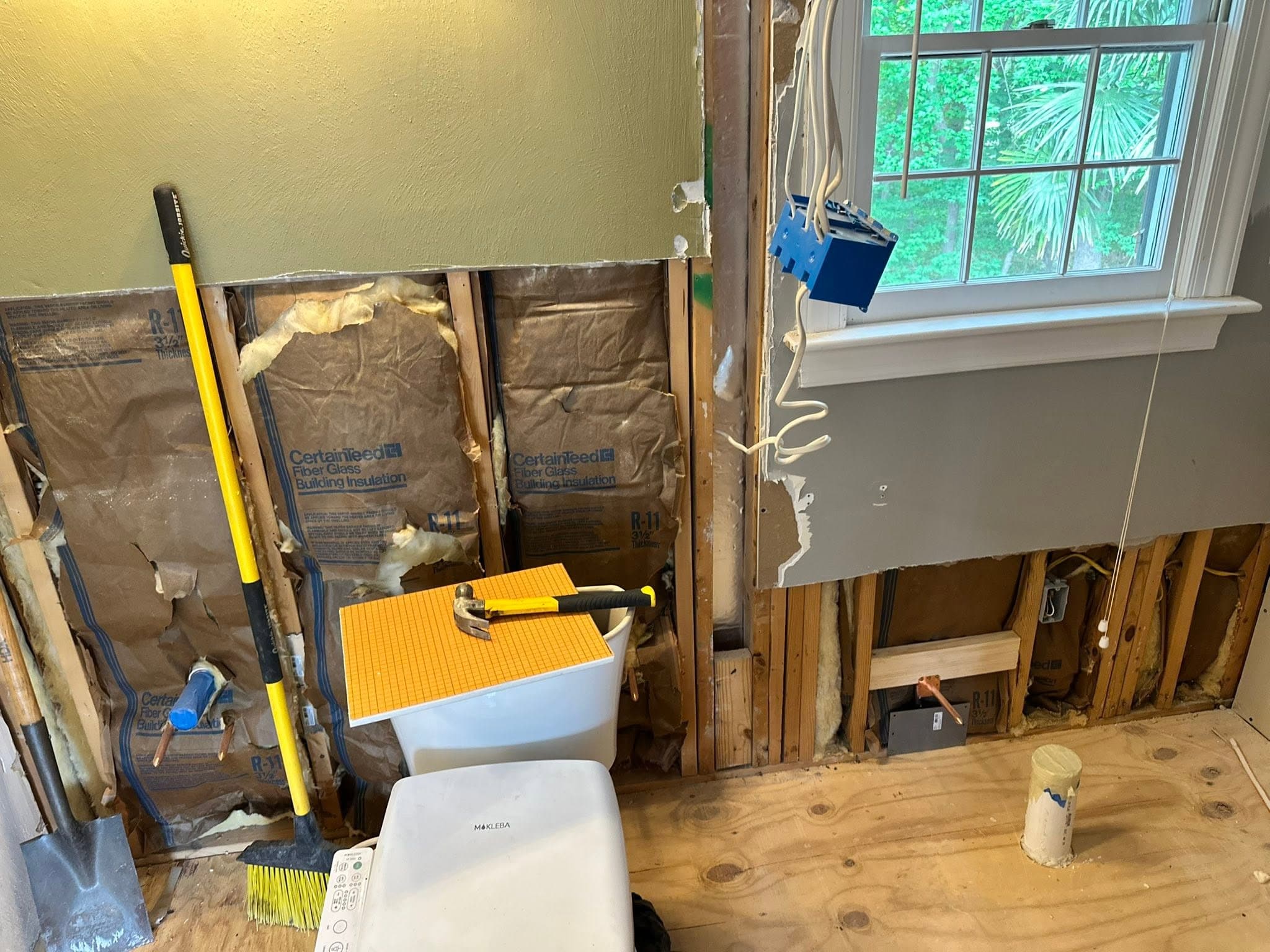
If you have refilled every trap, the toilets are solid, and the smell is still there — or it gets worse after it rains or when the washer drains — the problem is likely in the pipe itself.
A lot of homes in Portsmouth, Norfolk, and Chesapeake were built with cast iron drain lines that are now 50 to 70 years old. Cast iron rusts from the inside and eventually splits along the bottom, usually where you cannot see it: in the crawl space, inside a wall, or under the slab. Clay sewer pipe outside has the opposite problem; the joints separate and tree roots move in. Our high water table and sandy soil that shifts with every storm make both of those worse.
The signs of a leaking drain line are a smell that lingers no matter what you clean, damp or sunken spots in the crawl space or yard, more bugs or rodents than usual, and several drains running slow at once. That last one matters: if more than one fixture is backing up, read our guide to the warning signs of a failing sewer line before you spend money on anything else.
How We Find the Source
Guessing is expensive. We start with the simple checks — traps, toilet seals, and the vent — and then, if the odor is still unexplained, put a camera down the line to see exactly where it is cracked, separated, or rooted. On some jobs we use a smoke test, pushing harmless smoke through the drain system and watching where it comes out.
Once we know what failed, the repair is usually straightforward. A bad section of pipe can often be cut out and replaced without touching the rest of the system. When the damage runs the length of the line, our sewer line repair and replacement team can often use trenchless methods that leave the yard, driveway, and trees in place. If what we find is buildup rather than damage, professional drain cleaning is the cheaper answer, and we will say so.
If raw sewage is coming up through a drain, stop using water in the house and call us for emergency plumbing service. We answer 24/7 and typically arrive within 60 to 90 minutes anywhere in Hampton Roads, from Portsmouth and Suffolk to Virginia Beach and Hampton. Reach Newman's at (757) 465-0883, or stop by 2140 Colorado Ave., Portsmouth, VA 23701. Every repair is backed by our 100% workmanship guarantee.
Frequently Asked Questions
Why does my house smell like sewer?
Your house smells like sewer because gas from the drain system is escaping past a seal that should hold it back, most often a dry drain trap, a failed toilet wax ring, a blocked roof vent, or a cracked drain pipe. Start by running water in fixtures you rarely use; if the smell stays, call Newman's at (757) 465-0883 and we will trace it.
Is sewer gas in the house dangerous?
Low levels of sewer gas are mostly an irritant, causing headaches, nausea, and sore eyes, but high concentrations in a closed space can be harmful and the methane in it is flammable. Air the house out, find the source quickly, and treat any strong sulfur smell near a gas appliance as a possible natural gas leak.
Why does the sewer smell come and go?
A sewer smell that comes and goes usually follows water use or weather. Traps that evaporate between uses, a vent that only fails when several fixtures drain at once, and cracked pipe that leaks more when the ground is saturated after rain all produce an on-and-off odor.
Can a water heater make the house smell like sewer?
Yes, but only in the hot water. If the rotten-egg smell appears when you run hot water and not cold, it is usually bacteria reacting with the water heater's anode rod, not sewer gas. Replacing the anode rod or flushing the tank typically clears it up.
Need help with this?
Newman's Plumbing has served Hampton Roads since 1994.